Laser Speckle Imaging System
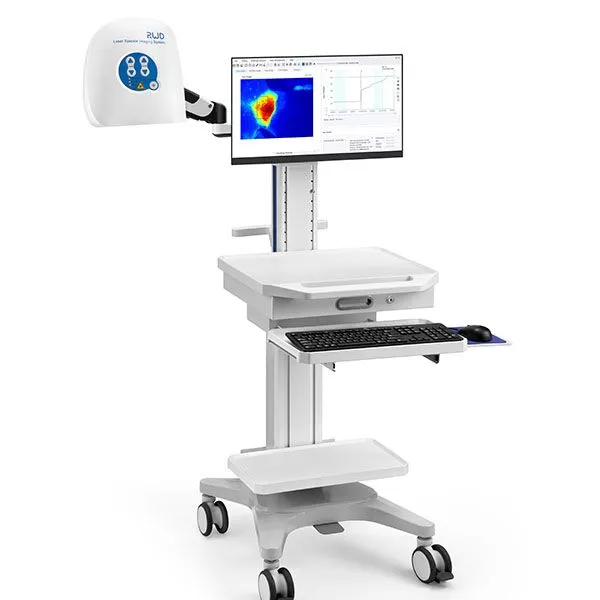
Overview
A Laser Speckle Imaging System is a non-invasive optical imaging technology used to visualize and quantify real-time blood flow and microcirculation in biological tissues. It is widely applied in biomedical research, neuroscience, vascular studies, dermatology, and preclinical imaging.
How Laser Speckle Imaging Works
When coherent laser light illuminates biological tissue, it scatters and forms a random interference pattern known as speckle.
Static tissue produces a stable speckle pattern
Moving particles (such as red blood cells) cause fluctuations in the speckle pattern
By analyzing these fluctuations, the system generates high-resolution maps of tissue perfusion and blood flow dynamics.
Key Features
Real-time imaging of blood flow
Non-contact & non-invasive
High temporal and spatial resolution
Wide field-of-view imaging
Quantitative perfusion analysis
Fast data acquisition and processing
Applications
Neuroscience: cerebral blood flow monitoring
Cardiovascular research: microvascular perfusion studies
Dermatology: skin blood flow assessment
Ophthalmology: retinal and choroidal circulation
Wound healing & burns research
Preclinical and translational research
Advantages of Laser Speckle Imaging
No contrast agents required
Suitable for longitudinal studies
Sensitive to microvascular changes
Simple experimental setup
Ideal for live imaging and functional studies
Typical System Components
Coherent laser light source
High-speed scientific camera
Imaging optics
Data acquisition & analysis software
Vibration-isolated platform (optional)